Wonderful Essential oil Scents for hand Sanitizer
Mint | Lemon | Lavender | Cinnamon | Lemongrass | Sage | Tea Tree | Eucalyptus | Rosemary
 All Natural Essential Oils
Healing Spa's Health Oil Introduction
Meet Olga and the story behind the products
My company was created in 2018 to heal an enrich people's lives
My journey of essential oils began when I turned 50, I noticed changes happening to my skin, like skin sensitivity and light spots, this was caused from, food, the environment and products like soaps and lotions to laundry detergent, fabric softeners and the list goes on. Most products on the market are loaded with chemicals, sulfates, phosphates formaldehyde, and fragrances just to name a few.
I had to become mindful of what I was putting in my body and on my skin. I had to toss the perfumes which irritated my skin and replace them with a natural way that is when I began using essential oils. I also use essential oils to cleanse the air in my home and at the shop, the oils are a lot gentler to us and to my furry pups, all pets would benefit from them.
I love the way essential oils make me feel and they do not irritate my skin. I learned how beneficial and therapeutic essential oils are for your skin and overall health. When applying essential oils to your skin you should always dilute them with a carrier oils as an example coconut oil is good also hydrating and works well with mostly all essential oils. You can also put essential oils in a diffuser for healing, cleansing aromatherapy effects. It wonderful!
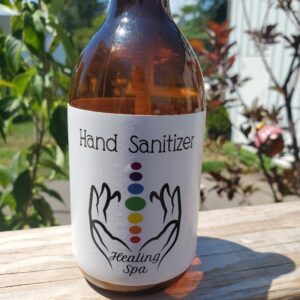
Before COVID 19 I had already been making homemade sanitizer, this is a signature fragrance that I created, and I hope you enjoy the aroma as you ward off the germs that cause disease. My intention for this product is to not only sanitize your hands but to also uplift your spirit. My husband (Charles) and a friend (Rob) suggested that I sell the sanitizer. I have given them away to many people coming in our paths and at the shop and they all like the how it feels on their hands and they love the smell of it too.
Sanitizer Oil Benefits
Lavender Oil - Lavender is a beautiful fragrant purple flower and one of the most known and loved oils worldwide Lavender promotes relaxation, stress relief and skin health. I love the flowers so much that I have bushes of lavender in my garden. It is a perfect combination to the sanitizer.
Lemongrass Oil - has a lemony fragrance with earthy undertones. It is often used in Thai cooking this oil has been prized for its digestive aid, reduces body aches, fights bacteria it's anti-septic and astringent properties made perfect for skin care. This oil is used to make soaps and lotions, also a great oil for diffusing. This is another favorite oil I use in combination with Lavender.
Tee Tree Oil - Is known for its powerful antiseptic properties and can sooth wounds, it also has powerful cleansing and purifying affects Tea Tree has a woodsy and earthy aroma making it a perfect complement to the sanitizer.
Patchouli Oil - Known as an anti-fungal and antiseptic properties, commonly used in fragrances, soaps and deodorants,it has a sweet, musky and spicy aroma, I love its aroma and also use this in the sanitizer a little goes a long way!
Aloe Vera Gel - Is used topically for its soothing moisturizing benefits, It is an antioxidant, includes vitamin A and C and it is highly anti-inflammatory good in treating dry skin.
Ethyl Alcohol - It is distilled 80%
The CDC requires at least 60% Ethyl Alcohol as an active component to hand sanitizers to be an effective sanitizer!
There you have it, I hope you enjoyed this description of my product which is one of many signature products, that will be coming soon for your skincare needs from cleansers to moisturizers for that beautiful moisturized glow its pure and simple.
We will keep you posted on that. Thank you so much for your support!
This product is a woman owned company, made with Love in the U.S.A
Lemon hand sanitizer
Lemon oil is commonly used in the kinds of commercially available products you encounter every day. If you walk down the aisles of any grocery store, you’ll find everything from household cleaner to hand soap to flavored sparkling water with the essence of lemon. As is the case with many citrus oils, the scent closely mimics that of the fruit from which it’s derived: bright, light, zesty, and clean.
These days, of course, a lot of those flavors and smells are made artificially, but still, there’s a reason that lemon has become so universally identified with freshness and cleanliness: Its oil is a powerful antibacterial, astringent, and antiseptic agent.
There’s a reason that lemon has become so universally identified with freshness and cleanliness: Its oil is a powerful antibacterial, astringent, and antiseptic agent.
Diluted lemon oil can be wonderfully effective when it comes to skin care because of its high concentration of D-limonene, a compound that assists in diminishing the appearance of wrinkles, promoting circulation, and toning the skin. In fact, recent research showed that D-limonene has skin-repairing and anti-inflammatory properties.
Cinnamon hand sanitizer
If lemon oil is bright, cool, and invigorating, cinnamon oil is its opposite: sweet and spicy, musky and warm. For me, cinnamon conjures up a distinct mixture of sexy exoticness and cozy familiarity, which makes sense because it’s both a Far East import and a spice drawer mainstay.
Derived from both the bark and leaf of the Cinnamomum verum tree, it’s actually one of history’s oldest essential oils, with the Egyptians recording their extensive use of it in Ebers Papyrus, a medical text dating to approximately 1550 BC.
For me, cinnamon conjures up a distinct mixture of sexy exoticness and cozy familiarity.
At that time, cinnamon was a hot commodity. It was expensive and hard to get because Arab traders controlled most of the supply coming from Sri Lanka and India and—in a pretty savvy marketing tactic—they kept the true source of their supply a secret. Cinnamon oil was affordable only for the very wealthy—emperors, royals, and, later on, Europe’s elite. Fortunately for us, price and access to this super-useful oil are no obstacle today.
In aromatherapy, cinnamon essential oil can be used to help clear up chest colds. Applied topically, it can soothe muscle aches and pains, thanks to its antispasmodic and analgesic properties. It’s also an antiseptic and makes a powerful natural preservative. It is both antibacterial and antimicrobial, as well as being anti-inflammatory, and pain-relieving. Some studies have shown that cinnamon oil contains powerful antioxidants and could potentially be useful in fighting neurological disorders and heart disease.
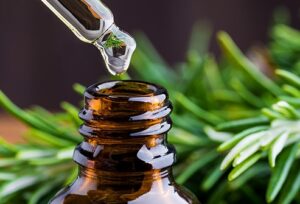
Lemongrass hand sanitizer
Google “lemongrass” and your search will most likely garner a bunch of hits for Thai restaurants in your local area (yum!). I’m all for a killer curry, but I’m even more into the plant’s essential oil.
Lemongrass is a fast-growing, tropical grass native to Sri Lanka and south India and is now cultivated in warm climates in Africa and Asia. The entire plant is utilized in everything from tea to cleaning products, and it has been used for years in Indian healing traditions to treat maladies like gastrointestinal issues and fever (it earned the nickname “fever grass”).
I like to use it for its cheerful, energetic scent alone, but there also happens to be plenty of evidence that it possesses powerful medicinal and pharmacological properties.
Lemongrass essential oil is derived from the steam distillation of the plant and, true to its name, it possesses a mild, sweet, lemony-yet-herbal aroma. I like to use it for its cheerful, energetic scent alone, but there also happens to be plenty of evidence that it possesses powerful medicinal and pharmacological properties, including the potential to slow the growth of cancerous cells and tumors.
Research also shows that lemongrass essential oil is antibacterial and anti-fungal, antimicrobial, anti-inflammatory, and can be a potent insect repellent. Its antifungal properties are especially helpful in combating the nasty yeast associated with dandruff. One study noted that participants who used a dandruff tonic with a 10 percent concentration of lemongrass oil saw a significant reduction in dandruff in as little as a week.
Sage hand sanitizer
Clary sage possesses myriad beneficial properties for the skin: It’s antibacterial, astringent, antiseptic, and can help improve circulation. I like the uniquely sweet herbal aroma of clary sage, which helps to cut through some of the more pungent ingredients used in natural skin care, too.
Clary sage has been lauded for its reputed ability to regulate hormones, and its scent is thought to have antidepressant effects.
Clary sage is a perennial plant that is native to the northern Mediterranean region and North Africa; its essential oil is derived via the steam distillation of the plant’s flowering tops and leaves. Although the ancient Egyptians used it in medicinal practices, it wasn’t until medieval times that clary sage really took off. During this time, doctors and herbalists used clary sage seeds to help treat vision problems; “clary” is derived from the Latin word for clear, “clarus.” And it was also used to flavor wine (and referred to as “muscatel sage” because of its similarity to German muscat wine). Someone, somewhere, got clever—maybe while drunk off clary sage wine?—and mashed up the two nicknames. Hence: clary sage.
Clary sage has been lauded for its reputed ability to regulate hormones, and its scent is thought to have antidepressant effects. A 2014 study of twenty-two postmenopausal women in their 50s—some of whom were depressed—showed that breathing diffused clary sage helped to alleviate participants’ depression by lowering cortisol levels and improving thyroid hormone levels. And a 2012 study revealed that clary sage—along with lavender and marjoram—makes an effective massage treatment for alleviating menstrual pain and cramping.
Lavender hand sanitizer
Okay, okay. I know you’ve heard about lavender oil so many times in your life (and in this book) that you’re rolling your eyes at me. Why did the Taylor Swift of the oil kingdom make it onto my top 10 list? Because the honest truth is that it’s impossible to deny how amazing lavender oil is.
First of all, what we call lavender is actually Lavandula angustifolia, one type of lavender among 39 total species. Different species have different properties, but all types contain large proportions of linalool, linalyl acetate, eucalyptol, and camphor. That’s a lot of components to have in high quantities, and it’s the reason it’s such a powerhouse essential oil. Lavender is: sedative, antispasmodic, anti-anxiety, anti-inflammatory, antimicrobial, antioxidant, antibacterial, anesthetic, immune-boosting, and antiviral.
Why did the Taylor Swift of the oil kingdom make it onto my top 10 list? Because the honest truth is that it’s impossible to deny how amazing lavender oil is.
It’s super safe, but it does have a high content of linalool, which can be sensitizing for some people. As with all essential oils, and ingredients in general, be sure to try a small amount on your skin, diluted at about six drops in one tablespoon of carrier oil, and watch for a reaction.
If your skin loves lavender, you can use up to a 50-50 mix of half lavender oil, half carrier oil in your DIY products. I use lavender in a million different ways, all day, every day.
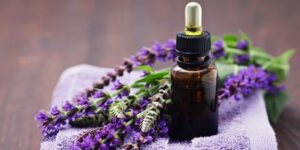
Tea tree hand sanitizer
Tea tree oil (also called melaleuca oil) is definitely enjoying a moment in the natural-beauty-world sun right now, and deservedly so. It’s pretty awesome stuff.
The only place that tea trees grow naturally is in Australia, but they grow super abundantly there. Traditionally, native Australian cultures used tea tree leaves to treat coughs and colds, heal wounds, and alleviate sore throats and skin ailments.
Tea tree oil is antiviral, anti-inflammatory, and exhibits anticancer activity.
Tea tree oil is antiviral, anti-inflammatory, and exhibits anticancer activity. It kills oral bacteria for up to two weeks, can be used for gingivitis, heals mild to moderate dandruff, kills the influenza virus, and has been shown to slow the growth of tumors in mice. This Australian wonder also works like benzoyl peroxide to treat acne. It takes longer, but causes fewer side effects, while being less drying than the common drugstore ingredient.
Eucalyptus hand sanitizer
Eucalyptus essential oil is definitely not for the weak. Even if you’ve never smelled it directly, you’ve probably smelled something that contains it—like Vicks VapoRub, maybe? The scent is similar to camphor (another ingredient in VapoRub, and also in Tiger Balm ointment) and slightly minty. It will clear your airways super quick and can take your breath away.
The scent is a little strong, but it really freshens up a room and makes the air feel clean.
Here’s what else it’s been shown to do: It works as a pesticide and has the ability to kill fungus, bacteria, insects, mites, and weeds—and it has been believed to kill the drug-resistant parasite that causes malaria. (It’s possible this is why eucalyptus trees were first planted in California in the 1850s. They were an invasive species from Australia but the government was worried about the spread of malaria. The trees helped!) It can also help boost your immune system and is anti-inflammatory.
I like to diffuse eucalyptus oil at home. The scent is a little strong, but it really freshens up a room and makes the air feel clean. It also makes a great pantry and closet moth and bug repellent.
Rosemary hand sanitizer
The scent of this oil is a lot like the herb you put in your food. It’s commonly found in skin care, especially natural products, because it not only has topical benefits but also will extend the shelf life of a product exponentially.
While it stimulates many bodily systems, it also decreases levels of the stress hormone cortisol.
Rosemary oil is a stimulant. When inhaled, the aroma of rosemary has been shown to increase heart rate, blood pressure, and respiratory rate and boost your immune system. It has also been shown to increase brain wave activity and aid the part of your nervous system that controls organ function. But while it stimulates many bodily systems, it also decreases levels of the stress hormone cortisol. And it does all of this while airborne, so you can simply diffuse it and gain these health benefits. If you like the scent of eucalyptus, you can combine it with rosemary to make your space smell like a forest.